






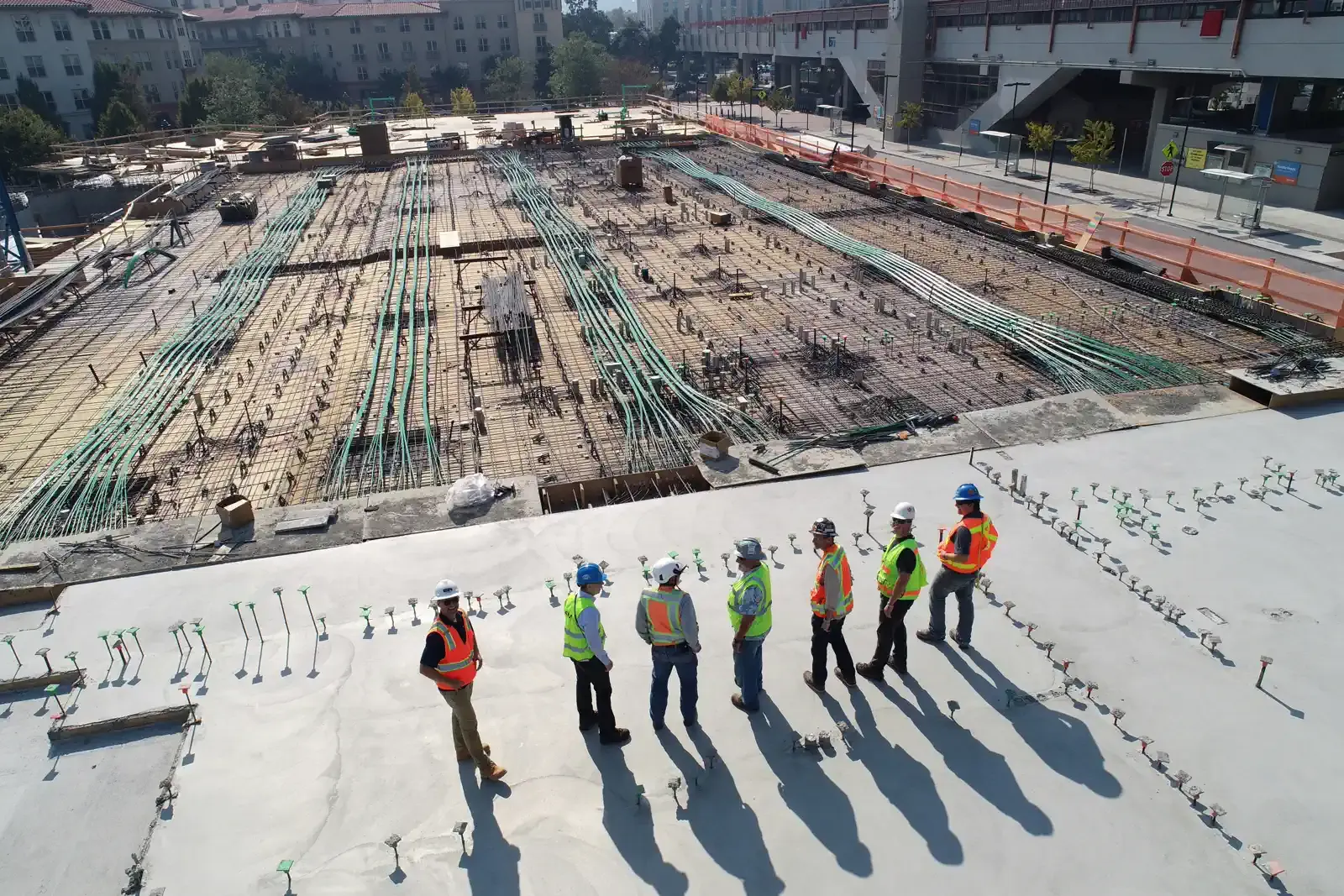
A project’s ability to engage partners depends first and foremost on the quality of its preparation. BIID steps in to assess its coherence, gauge its actual level of maturity and identify the conditions still required for its implementation. This analysis focuses as much on the soundness of the project as on the responsibilities, risks, authorisations, resources and implementation arrangements that determine its credibility.
BIID’s project engineering services include, in particular:
-
Le cadrage stratégique et institutionnel
Clarification du besoin, du périmètre, des objectifs, de la gouvernance et des responsabilités ;
-
La préparation technique
Examen des études, des variantes, du dimensionnement, des coûts, des performances attendues et des conditions d’exploitation ;
-
La structuration juridique et réglementaire
Analyse du foncier, des autorisations, des contrats, des obligations applicables et des dispositifs de sécurisation ;
-
L’ingénierie économique et financière
Analyse des coûts, des flux, de la soutenabilité, de la capacité de paiement, des besoins de financement et des principales sensibilités ;
-
L’intégration ESG et climatique
Prise en compte des risques environnementaux et sociaux, de la résilience, des parties prenantes et des mesures d’atténuation ;
-
La préparation opérationnelle et d’impact
Organisation de la mise en œuvre, de l’exploitation, du suivi des engagements et de la mesure des résultats.

A project’s ability to attract partners depends first and foremost on the quality of its preparation.
Deliverables that ensure the project progresses smoothly
Depending on the level of maturity and the needs identified, BIID’s involvement may lead to the development or consolidation of:
- Maturity assessments and readiness plans;
- Pre-feasibility or feasibility studies;
- Institutional, regulatory and economic analyses;
- Economic and financial models;
- Governance frameworks and frameworks for the allocation of responsibilities;
- Risk registers and control mechanisms;
- ESG and impact measurement frameworks;
- Structured documentation for technical and financial partners.
Structuring is therefore not simply a matter of improving the presentation of an existing project. It aims to strengthen its foundations and, where necessary, to review its scope, phasing, business model, governance or risk allocation. At the end of this process, the project has a more robust structure, better-substantiated assumptions and a clearer implementation framework. It can then move on to the stages of financial structuring, partner mobilisation and negotiation under more favourable conditions.